
What is Mullvad Free Download?
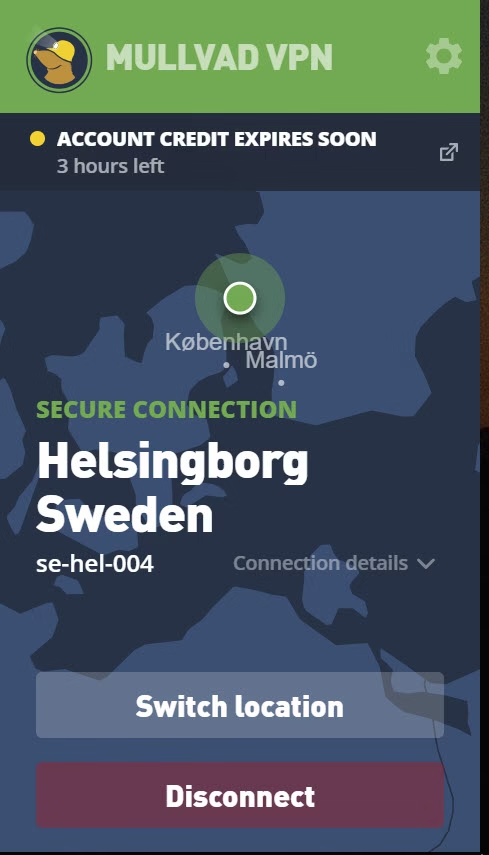
Mullvad is a virtual private network (VPN) designed to hide your IP address and keep your computers and online browsing safe from prying eyes. It focuses on Internet privacy by blocking trackers and cookies, ensuring your identity stays hidden and private. I like how this networking utility works quietly in the background, using advanced technology to create a fake IP while still letting you configure options from the system tray with clear notifications. You just log into your account, pick a protocol, choose a port number, and select a country from the assigned server list before you connect. The application is quick to launch, and every connection shows up in your saved list for easy access. You can also download Fort Firewall Free Download
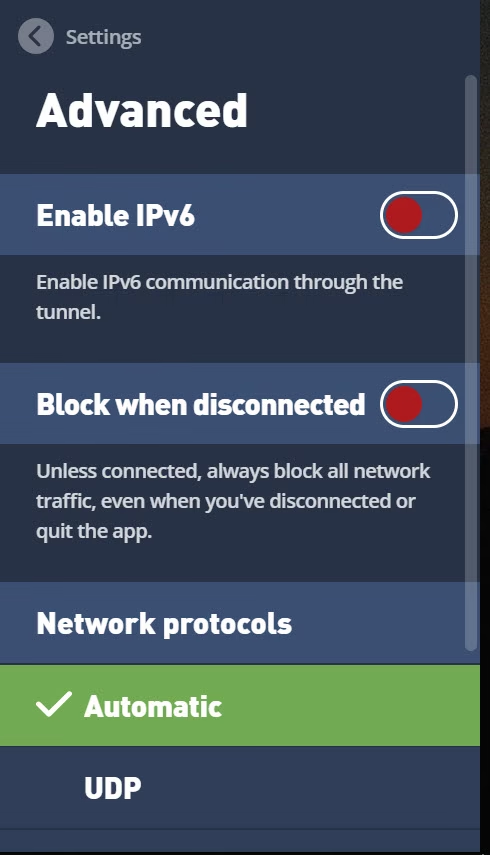
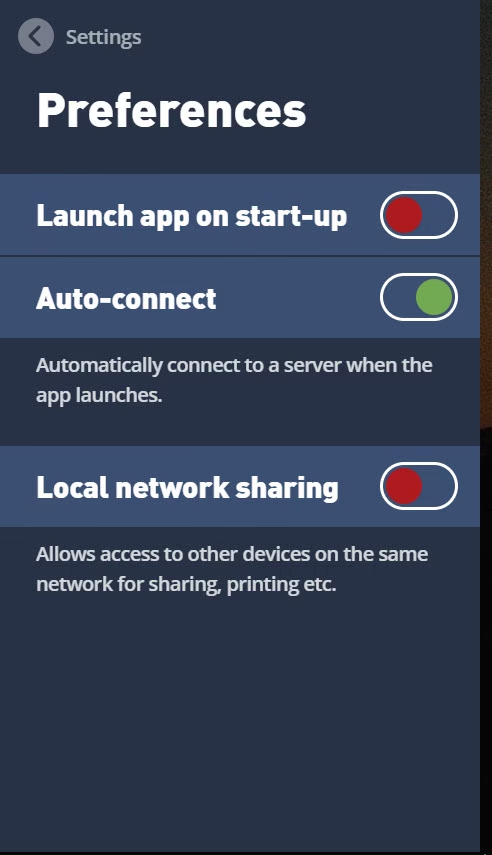
From my experience, Mullvad’s configurations make it possible to safely browse without DNS leaks, and you can block connections in case of a VPN failure. It even allows you to exclude certain apps or sites from the VPN tunnel. Being a Swedish provider, it handles traffic with strong privacy laws in mind, and you can set it to run at startup on Windows. It’s lightweight, barely using computer resources, and works quietly in the background while you focus on other tasks. Plus, the settings are straightforward, making it one of the easiest VPN tools I’ve tested for both beginners and advanced users.
Mullvad VPN is a highly secure and privacy-first virtual private network service designed to protect your online identity and activity. Known for its strong commitment to anonymity, Mullvad doesn’t require personal details for registration — not even an email address. Try Psiphon
With its fast servers across multiple countries, strong encryption protocols, and a strict no-logs policy, Mullvad is a top choice for privacy advocates, journalists, and everyday users who value internet freedom and security.
Why Use This Software?
- Industry-leading privacy practices with zero logs.
- Anonymous account creation process.
- Fast, stable connections with WireGuard support.
- Wide range of server locations for speed and access.
- Flexible payment options, including anonymous methods.
Screenshots
Key Features
- 🔐 No-Logs Policy – Mullvad never stores logs of user activity, connection times, or IP addresses, ensuring complete anonymity.
- 🆔 Anonymous Sign-Up – Generates a unique account number instead of requiring personal information or email addresses.
- 🌍 Global Server Network – Access high-speed servers in dozens of countries for both privacy and content access.
- ⚡ WireGuard & OpenVPN Support – Offers modern, secure protocols for fast and reliable connections.
- 🛡 Built-In Kill Switch – Automatically blocks internet traffic if the VPN connection drops, preventing data leaks.
- 📱 Multi-Platform Support – Works on Windows, macOS, Linux, Android, and iOS devices.
- 💳 Multiple Payment Options – Pay with credit card, PayPal, cryptocurrency, or even cash sent by mail.
How to Install
- Download the Mullvad VPN installer from the Link below.
- Run the setup file and follow the installation wizard.
- Launch the app and enter your Mullvad account number.
- Connect to your preferred server location and start browsing securely.
- 👉 Download Psiphon for Windows – Free
System Requirements
| OS | Windows 7, 8, 10, 11 (64-bit recommended) |
| CPU | Intel or AMD dual-core processor |
| RAM | 2 GB minimum |
| Storage | 150 MB free space |
| Internet | Required for VPN connectivity |






Comments (0)